
The honest truth about strategies in crash games
Here is a frank admission you rarely hear from promotional sites: no strategy can change the platform’s mathematical edge or predict the crash point. Each round’s result is set by a random number generator in advance, and it cannot be influenced from the outside.
So why do strategies exist at all? The answer is that they work not on the “round outcome” but on your behaviour. A sound system of bankroll and emotional management will not turn the game into a source of income, but it does prolong the fun, shields you from impulsive losses and makes your sessions predictable in terms of risk. If you are brand new to the format, read how the game works first, then come back here. That honest approach is exactly what we will discuss below.
Remember the key principle: a crash game is entertainment with a negative expected value. Any tactic slows down losses and instils discipline, but it does not guarantee profit.
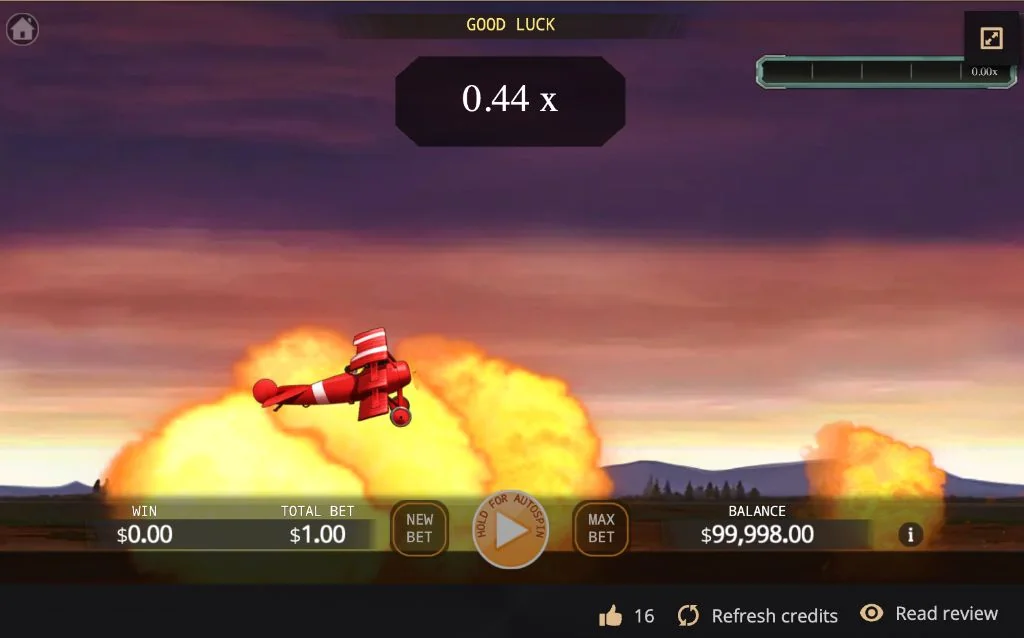
Bankroll management — the foundation of every session
If there is a “secret to long play”, it is bankroll management. By bankroll we mean the sum you have deliberately set aside for entertainment and are prepared to lose without harming your budget. Here are the basic rules that separate a mindful player from an impulsive newcomer.
- The 1–2% rule. A single bet should not exceed a couple of percent of your bankroll. This lets you ride out a losing streak.
- Session limit. Decide in advance how much you are willing to lose in one sitting, and stop when you hit that line.
- Win limit. Paradoxically, locking in profit matters just as much. Hit your target and walk away — do not give it back.
- No chasing. Trying to “win it back” by doubling stakes is the fastest route to a zero balance.
| Bankroll size | Bet (1–2%) | Session stop-loss |
|---|---|---|
| ₹5,000 | ₹50–100 | ₹1,000 |
| ₹10,000 | ₹100–200 | ₹2,000 |
| ₹25,000 | ₹250–500 | ₹5,000 |
These figures are only a guide. The main thing is that the amounts feel comfortable for you personally and do not affect your everyday expenses.
Popular methods and an honest review
Several classic approaches circulate in player communities. It is worth weighing them soberly — with their upsides and their pitfalls.
The fixed-stake method
The simplest and safest. You bet the same amount round after round, regardless of the result, and cash out at a steady, modest coefficient (for example, ×1.5–×2.0). The approach promises no quick riches, but it stretches your bankroll beautifully and eases the emotional load.
The two-cash-out strategy
This uses the option of several bets. The first slot is set for an early auto cash-out for stability, the second for a higher multiplier. If the “long” slot crashes, the early one partly offsets the loss. It is the golden mean between caution and adventure.
Martingale — why it is dangerous
The idea of doubling your stake after every loss looks tempting, but in crash games it is a path to disaster. A few unlucky rounds in a row and the required stake balloons beyond your limits or your entire bankroll. We strongly do not recommend Martingale.
Any method built on aggressively increasing stakes leads, sooner or later, to serious losses. Conservative approaches are duller, but they are exactly what let you play longer and more mindfully.

Volatility and choosing a target coefficient
For a strategy to be mindful, you need to understand the link between the chosen multiplier and how often you win. This is not a “secret formula” but simple probability maths worth keeping in mind before every session.
The lower your auto cash-out target, the more often it fires, but the smaller each individual win. The reverse is also true: a high target brings rare but large payouts. Over the long run, thanks to the built-in 97% RTP, the average return stays roughly the same at any target — only the character of the game changes: calm and steady, or risky and “choppy”.
| Target multiplier | Rough frequency | Game character |
|---|---|---|
| ×1.2 – ×1.5 | Very frequent cash-outs | Low risk, slow bankroll growth |
| ×1.8 – ×2.5 | Moderate frequency | Balanced “sweet spot” range |
| ×3 – ×10 | Rare cash-outs | High risk, noticeable drawdowns |
| ×50 and above | Extremely rare | Lottery mode, almost always a crash |
The frequencies above are illustrative guides, not exact numbers: every round is independent, and streaks can deviate from the average in any direction. That is precisely why no “warm-up” or analysis of the round history improves your odds — the past does not influence the future in a system with a random RNG.
For most players the ×1.8–×2.5 range is ideal: it combines an acceptable cash-out frequency with a meaningful win size and does not wreck the bankroll through long losing streaks.
Red Baron signal: do working signals exist?
The “signal” query is one of the most popular among players. The web is full of Telegram channels and bots promising to send “precise signals” about when to bet and when to cash out. Here is what they really are.
Since the crash point is generated randomly and is inaccessible from the outside, no signal can know a round’s outcome. Most such channels run one of a few schemes: they either post vague “forecasts” fitted to a result that has already happened, lure you into a paid subscription, or funnel you to dubious platforms for an affiliate commission.
- “Signals” have no access to the server-side RNG and physically cannot predict a round
- Free signals are bait leading to a paid subscription or a sign-up via a referral link
- Coincidences are explained by survivorship bias: lucky calls are remembered, failures forgotten
Predictors and “hacks”: why they are dangerous
Predictor apps and promises of a “hack” are a category of risk all their own. Not only do they fail to work, such programs often pose a direct threat.
The real risks
- Theft of personal and payment data via a malicious APK
- Charges for a fictitious “premium version”
- An account ban for breaking the platform’s rules
- Infection of your device with viruses and miners
What to do instead
- Rely on bankroll management and auto cash-out
- Practise in the demo and study volatility
- Set firm session limits
- Treat the game as entertainment, not income
Play with a cool head
The best strategy is discipline, limits set in advance and auto cash-out. Open the game and test your approach in practice.
Play NowThe best strategy of 2026: discipline meets auto cash-out
If we boil all the experience down to a single recommendation for 2026, it sounds like this: combine a fixed stake, a pre-set auto cash-out and firm limits. This combination promises no riches, but it delivers the most you can realistically get from a fair crash game — long, controlled entertainment.
- Fix your stakeChoose 1–2% of your bankroll and do not change it during the session.
- Set auto cash-outPick a realistic target (for example, ×1.7–×2.2) and trust the system.
- Define your limitsSet a stop-loss and a profit target — and stick to them strictly.
- Take breaksAfter a run of rounds, rest: fatigue breeds mistakes.

A single-session plan: a worked example
Theory only earns its keep in practice. Below is a hypothetical example of a disciplined session with a ₹5,000 bankroll. This is not a call to action or a promise of results, but an illustration of how stake, limits and auto cash-out fit together.
- PreparationSession bankroll — ₹5,000. We fix the stake at 1.5% — that is ₹75 per round. Profit target — 30% (₹1,500), stop-loss — 40% (₹2,000).
- Auto cash-out setupWe set auto cash-out at ×2.0. That means each winning bet brings ₹75 in net profit when it fires.
- Playing by the rulesWe run rounds without changing the stake and without giving in to the urge to raise it after a losing streak. Emotions stay out of the game.
- Exit pointsAs soon as the bankroll grows to ₹6,500 (the profit target) or drops to ₹3,000 (the stop-loss), the session ends immediately. No exceptions.
What the example shows: pre-set exit points only work when you honour them without “just one more round”. The discipline to exit matters more than any entry tactic.
Note that even a perfectly executed plan does not guarantee profit. Randomness can lead to either a quick hit of the target or a trigger of the stop-loss. The point of the system is not to “win for sure” but to keep control and stretch the fun while ruling out catastrophic emotional losses.
Psychology: your main opponent is yourself
The most cunning enemy in crash games is not the platform’s maths but your own emotions. Excitement, greed and the urge to win it back destroy even a perfect system. A few principles will help you stay clear-headed:
- Never play on emotion after a big loss or a big win
- Treat a loss as the price of entertainment, not a “debt” to be repaid
- If you catch yourself wanting to “put in a bit more” — that is a signal to stop
- Set an alarm for the session length so you do not lose track of time
If the game stops being fun or begins to affect your finances and mood, take a break and read our responsible gaming guide for self-limit tools and support contacts. You will find detailed answers to related questions in the FAQ section, and a comparison with other titles on the Comparison page.
Quick answers about strategy
No, and there cannot be. Any such promise is a scam. Strategies manage risk but never guarantee profit.
Absolutely not. Signals have no access to the RNG and cannot predict a round. They are either bait or outright fraud.
There is no universal value. For stability, ×1.5–×2.0 works well, but the final choice depends on your bankroll and your appetite for risk.
The history is useful for gauging overall volatility, but not for predicting a specific round: each outcome is independent, and a streak of low coefficients does not “oblige” the next round to be high.
Martingale is far riskier. Doubling after a loss makes stakes grow exponentially, and just a few unlucky rounds in a row can wipe out the whole bankroll. A fixed stake stretches play and guards against sharp losses.
No. The probability of reaching any multiplier does not depend on the stake — only the size of the potential win or loss changes. Managing your bet size is a risk-control tool, not a way to improve your odds.